
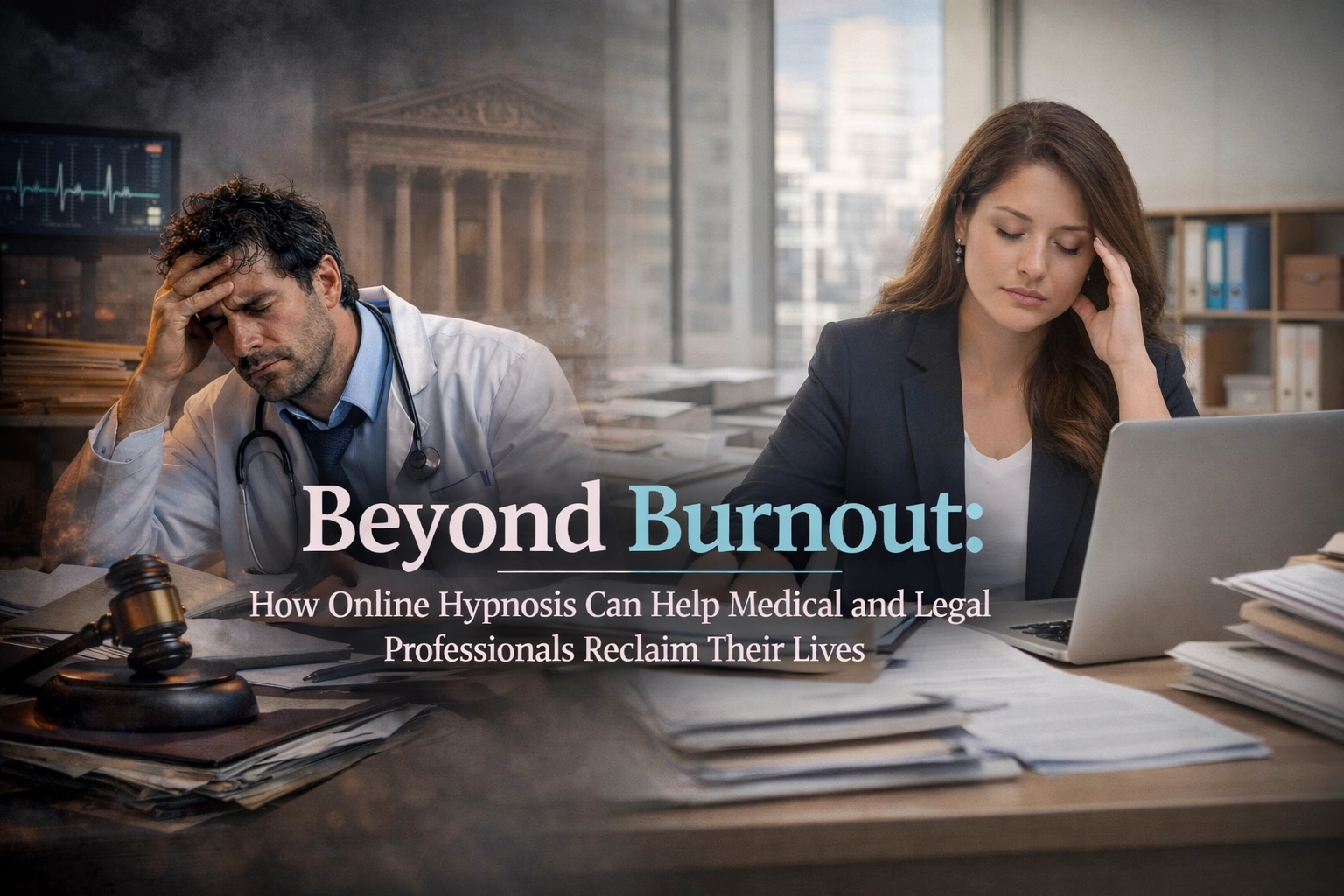
You are likely reading this in a rare moment of stillness, perhaps between patient rounds or after a grueling day of depositions. You are high-achieving, disciplined, and traditionally resilient. Yet, lately, the weight of your professional responsibilities feels less like a badge of honor and more like an anchor. You are not alone. The exhaustion you are feeling isn’t just physical tiredness; it is a profound erosion of the self that we clinically identify as professional burnout.
For medical and legal professionals, the stakes are perpetually high. There is no margin for error when a life or a multi-million dollar contract is on the line. But when the "always-on" switch becomes stuck, your nervous system begins to pay the price. If you feel as though you are operating on autopilot: detached from your work and distant from the people you love: it is important to recognize that this is a physiological response to chronic, high-level stress. It is not a sign of weakness; it is a signal that your internal resources need recalibration.
The Anatomy of Professional Burnout: More Than Just Stress
In the high-pressure corridors of hospitals and law firms, burnout often presents as a triad of symptoms: emotional exhaustion, depersonalization, and a diminished sense of personal accomplishment. You may find yourself experiencing a form of "compassion fatigue," where the empathy that once fueled your career has been replaced by a cynical detachment.
This state is often compounded by a lack of existential meaning-making. When your daily labor feels divorced from the values that originally led you to your profession, a deep psychological rift occurs. You might be physically present at the dinner table, but your mind is still navigating the complexities of a case or a difficult diagnosis. This cognitive "looping" prevents the brain from entering a state of restorative rest, leading to a cycle of chronic hyper-vigilance.

Agitating the Silence: The Cost of "Pushing Through"
The traditional advice for professionals is often to "work harder" or "manage time better." However, for those in the medical and legal fields, the problem isn't a lack of time management: it’s a lack of energy management. When you continue to push through the exhaustion, the psychological impact deepens.
- Interpersonal Strains: The irritability and emotional withdrawal common in burnout often bleed into your most cherished relationships, leading to a sense of isolation even when surrounded by family.
- Cognitive Decline: Chronic stress affects the prefrontal cortex, the area of the brain responsible for executive function, decision-making, and emotional regulation.
- Physical Somatization: Unresolved psychological stress often manifests as insomnia, tension headaches, or digestive issues, further depleting your ability to perform.
Without intervention, this trajectory can lead to a total collapse of professional efficacy. This is where specialized mental health recovery coaching becomes essential. It is about moving beyond mere "self-care" and into a structured process of psychological and physiological restoration.
Cognitive Reframing and Nervous System Recovery (Without Adding More to Your Plate)
To truly move beyond burnout, we must address the patterns of thought that keep you trapped in a state of high-alert. This is where structured online coaching can offer a unique and practical advantage. Instead of only talking about stress, we focus on changing the inputs that keep your brain locked in urgency: self-talk, perfectionistic rules, and the constant “scan for problems” mindset that makes it hard to ever feel off-duty.
Through cognitive reframing, we can begin to shift your internal narrative. Instead of viewing every challenge as a threat to your professional identity, we work to categorize stressors in a way that creates emotional distance and better decision-making. You’ll also learn simple, repeatable skills that help “downshift” your nervous system from sympathetic fight-or-flight into parasympathetic rest-and-digest—so your body can actually recover between demands.

Why Online Coaching Works for Busy Professionals
For a busy surgeon or a senior partner, the logistical hurdles of seeking support can be a barrier to recovery. The convenience of working online means you can do meaningful, focused work from the privacy of your home or office. There is no commute, no waiting room, and no risk of running into a colleague or client.
Moreover, the digital environment provides a sense of safety and control that is paramount for high-level professionals. You can choose a setting where you feel most comfortable, which helps you open up and actually practice the skills we discuss. By integrating stress management coaching into your existing schedule, you make recovery a consistent priority rather than an afterthought.
A Legacy of Expertise: Coaching with Gordon
When choosing a partner for your recovery, experience is the ultimate trust signal. At Coaching with Gordon, you are not working with a generalist. My methodology is backed by the experience of facilitating over 2,500 therapy groups and serving as a certified Substance Abuse Professional (SAP). I understand the specific ethical and professional pressures you face.
Our approach incorporates interpersonal learning, helping you understand how your professional persona interacts with your personal needs. We don't just aim for the absence of stress; we aim for the presence of vitality. Through a blend of clinical precision and compassionate support, we create a bespoke roadmap for your recovery.

The Path to Reclaiming Your Life
Recovery from burnout is not a passive process; it is an active reclamation of your agency. By engaging in mental health recovery coaching, you are making a strategic investment in your longevity and your happiness.
The benefits of this integrated approach include:
- Enhanced Emotional Resilience: Learning to navigate high-stakes environments without absorbing the surrounding chaos.
- Improved Sleep Hygiene: Utilizing hypnosis to quiet the "inner critic" and allow for deep, restorative REM sleep.
- Restored Purpose: Engaging in existential meaning-making to reconnect with the passion that first drew you to your field.
- Boundaries without Guilt: Developing the internal scripts necessary to protect your personal time and mental space.
Your Invitation to Professional Restoration
You have spent your career taking care of others: defending their rights, saving their lives, and managing their crises. It is now time to apply that same level of dedication to your own well-being. Burnout does not have to be the final chapter of your professional story. It can be the catalyst for a more sustainable, balanced, and fulfilling way of living.
I invite you to take the first step toward peace. Whether you are struggling with the unique pressures of political stress impacting your practice or the general exhaustion of a high-stakes career, there is a path forward.
Let’s begin the process of untangling the knots of chronic stress. I invite you to book a discovery call today. Together, we’ll use expert stress management coaching—and, if it’s a fit for you, optional online hypnosis—to help you reclaim your life, your relationships, and your peace of mind.
You have the power to change your narrative. Let’s start writing the next chapter.
