
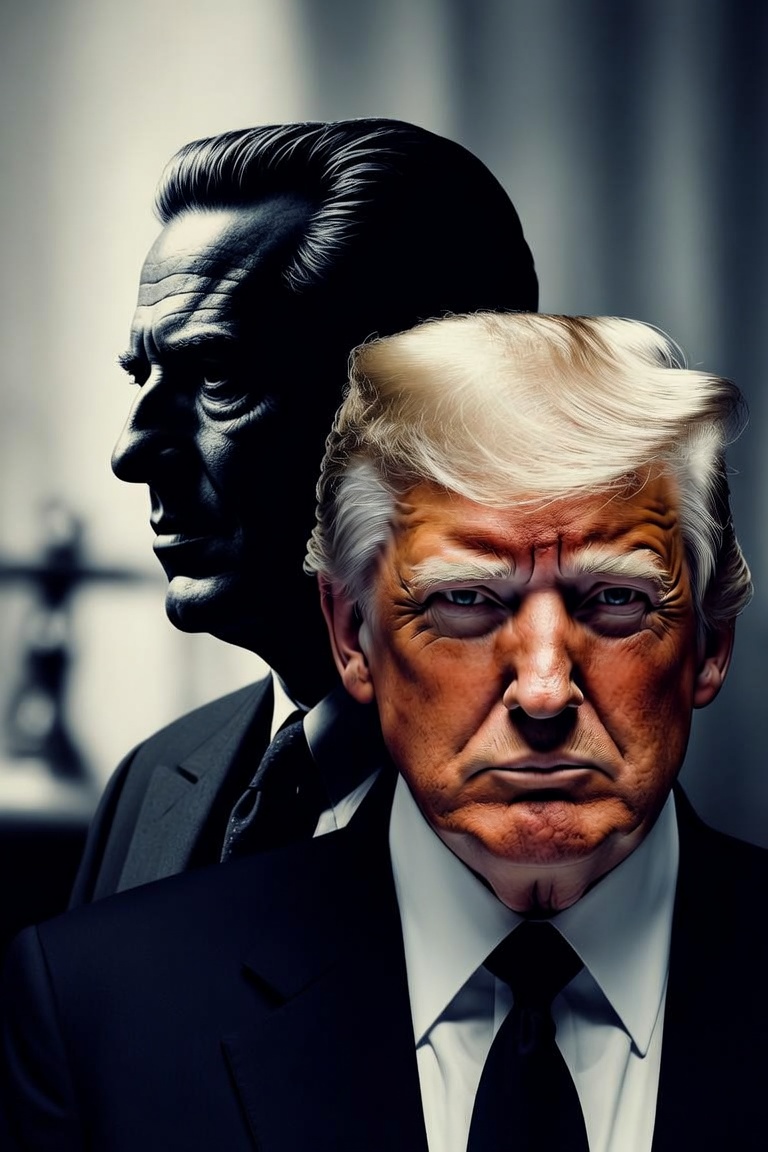
It’s the opening scene in what’s become an unavoidable Trump McCarthy comparison this summer. The room was small. A hotel ballroom in Wheeling, West Virginia, decorated for a Lincoln Day dinner — the kind of event a junior senator gives because someone asked him to, not because anyone expects it to matter. Joseph McCarthy hadn’t even planned to talk about communism that night. A speech on housing policy sat in his briefcase. A friend at the airport suggested he try something with more punch instead.
So he held up a piece of paper.
He told the Republican women in front of him that he had in his hand a list — the number would later be disputed, revised, disputed again — of people inside the State Department who were secretly loyal to Moscow. People shaping American foreign policy while working, in his telling, for the other side. The room, by most accounts, didn’t gasp. One local lawyer who was there said the charge barely caused a ripple.
It didn’t need to. By the time the wire reports hit the next morning, Joseph McCarthy owned the front page. He would own American politics for the next four years.
The Trump McCarthy Comparison Begins
Seventy-six years later, almost to the week, another politician stood in front of a much bigger crowd, on a much bigger stage, marking a much bigger anniversary — the 250th birthday of the country itself — and reached for the same paper, metaphorically speaking.
Standing beneath the carved stone faces at Mount Rushmore, the president told the crowd that communism was “the greatest threat to our country” the nation had ever faced — greater, he said, than the two world wars, greater than Pearl Harbor, greater than September 11th. The next night, on the National Mall, under a sky that had already forced 150,000 people to evacuate once for weather, he went further: the country’s soldiers hadn’t fought communism overseas, he said, just to watch it “rear its ugly head right back here in America.” It was, he told the crowd, “like a cancer. You got to cut it out.”
Two speeches, two Julys, two very different Americas. And somehow, the same move.
Here is the move, stripped down to its mechanics: you do not tell people to fear an enemy far away. You tell them the enemy is already inside. Not massing at a border, not sailing toward a coastline, but sitting at a desk down the hall, teaching a classroom, running for local office. McCarthy didn’t warn Wheeling about the Soviet Union. He warned them about the State Department — an American institution, staffed by Americans, a five-minute walk from where he’d stand a week later to make his case to the Senate.
The 2026 version does the identical thing. The threat isn’t described as a foreign government or a hostile army. It’s described as something that has already gotten back in — a menace that “reared its head,” a growth that needs to be excised from a living body. Once an enemy is relocated from out there to in here, the questions people ask about it change completely. You don’t debate an enemy that’s already inside your house. You don’t extend it due process. You look for it, and you cut it out.
That was always the most dangerous part of what McCarthy did — not the specific lie, but the frame that made lying unnecessary. Once “the communist” was defined as a hidden category rather than a documented fact, the number of names on the list stopped mattering. McCarthy said 205. Then 57. Then 81. He never once produced the list itself. It didn’t matter. The framework did the work the evidence was supposed to do.
The 2026 speeches lean on the same trick, updated. Ask what, specifically, “the Communist Party” refers to in a 2026 political rally, and the answer offered from the podium wasn’t an ideology or a platform — it was a grab-bag: immigrants without papers, criminals, “everybody that doesn’t want to work.” That’s not a description of communism. It’s a label loose enough to be stapled onto whoever is standing nearby when you need it.
This is what a floating accusation is built to do. It doesn’t need to be true, because it isn’t really a claim about the world — it’s a tool for sorting people into us and them without having to do the work of proving anything about either group. The vaguer the definition, the more people it can catch. McCarthy’s genius, if you want to call it that, was realizing evidence was optional once fear had already done its job. The crowd in Wheeling didn’t check his math. Nobody does, when the alternative — believing the enemy really is already inside — feels too urgent to interrogate.
And urgency is the other half of the machine. Telling a country that its current moment is more dangerous than the Second World War, more dangerous than the day the towers fell, isn’t an argument. It’s an instruction: stop weighing evidence and start reacting. Fear that large doesn’t ask you to think. It asks you to act — to support whatever measure, whatever hearing, whatever bill is offered as the antidote. In 1950 that antidote was loyalty boards and blacklists. What it becomes this time is still being written.
One more thing is worth sitting with, because it isn’t a coincidence of style — it’s a straight line. The lawyer who sat beside McCarthy through the ugliest years of his hearings, who helped him hunt for communists real and invented, was a young man named Roy Cohn. Decades later, Cohn became a mentor to a rising New York developer who would eventually become president. The rhetorical echo across these two speeches isn’t just an echo. In one very real sense, it’s an inheritance.
None of this requires you to believe communism poses no threat at all, or that every person who raises the alarm is acting in bad faith. It requires something narrower and harder to dismiss: that this specific pattern — an enemy relocated inside the country, defined vaguely enough to catch almost anyone, sized as bigger than the worst catastrophes in American memory, and released on cue before an election — has a name, a track record, and a body count of ruined careers behind it already.
We gave that pattern a name in 1950. We’re watching it again in 2026. The question worth sitting with is the one Wheeling never got around to asking that night in the ballroom: what happens to a democracy that keeps being told the enemy is already inside the house — and keeps believing it, every single time?
