

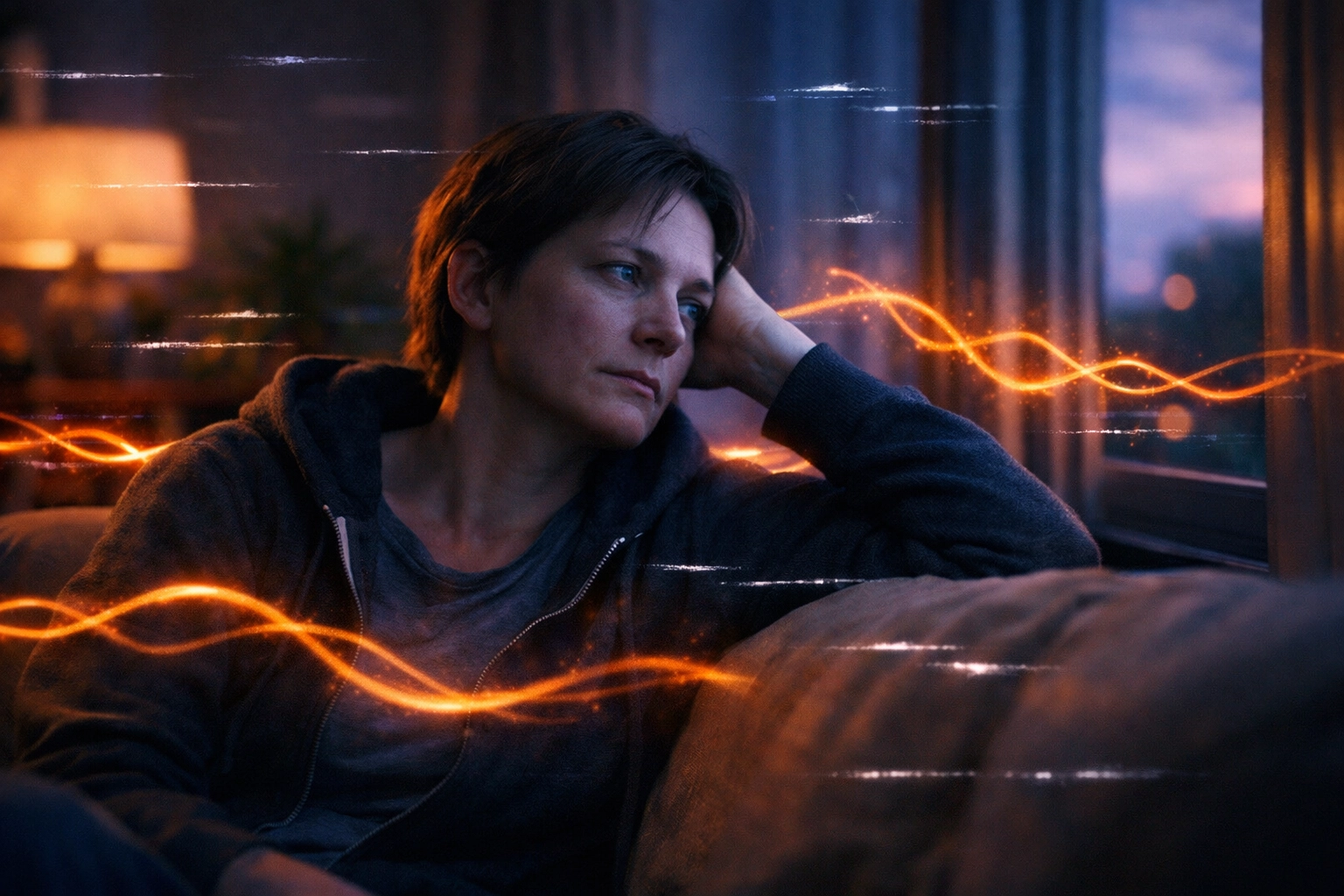
It’s 2:00 AM, and the glow of your smartphone screen is the only light in the room. You’re deep into a thread in one of your favorite online groups, and what started as a quick check of the news has turned into a two-hour spiral of frustration, anxiety, and disbelief. Your heart is racing, your jaw is clenched, and despite being exhausted, sleep feels miles away.
If this sounds familiar, you aren't alone. It’s not just you. Millions of people are currently navigating a landscape of heightened political stress that feels inescapable. Whether you are a teacher, a stay-at-home parent, a shift worker, or an executive, the weight of the world can feel like a heavy blanket that prevents you from finding true rest.
At Coaching with Gordon, I see people from all walks of life struggling with this exact issue. We often think of stress as something that happens "out there," but the reality is that political stress lives inside your body, impacting your nervous system and, most notably, your ability to get a good night's sleep.
Why Political Stress Feels Different
Stress is a natural part of life, but political stress has a unique way of getting under our skin. It isn't just about a single event; it’s about a constant stream of information that challenges our values, our sense of safety, and our hopes for the future.
Recent research published in the Journal of Education and Health Promotion (2025) indicates that political-related anxiety has become a significant public health concern, cutting across socioeconomic lines and contributing to chronic sleep disturbances. When we feel that our world is unstable, our brain enters a state of "hyper-vigilance." In this state, your body is essentially on the lookout for threats, making it physically impossible to drop into the deep, restorative stages of sleep.
This isn't a sign of weakness; it’s a biological response to a perceived threat. However, when that threat is a 24-hour news cycle, your body never gets the "all clear" signal it needs to relax.
The Trap of Online Groups and Political Stress
One of the primary drivers of this modern anxiety is the way we consume information. Online groups political stress is a specific phenomenon where the digital spaces meant for community and connection become breeding grounds for conflict and high-alert emotions.
We join these groups to stay informed or to feel a sense of belonging, but the algorithms are designed to keep us engaged by triggering our strongest emotions: often anger or fear. This constant "interpersonal learning" in a digital space can lead to a sense of exhaustion. You aren't just reading news; you are witnessing and participating in a digital battleground.
When you spend your evening engaging in these spaces, your brain releases cortisol and adrenaline. These are the "fight or flight" hormones. If you try to go to bed immediately after a heated digital debate, your brain is still essentially prepared to fight a tiger, even though you’re just trying to close your eyes.
The Simple Trick: The 4-7-8 Method
While it sounds too good to be true, the most effective way to combat this physiological high-alert state is through a simple, research-backed breathing technique known as the 4-7-8 method.
According to a 2024 study in Frontiers in Psychology, controlled breathwork is one of the fastest ways to engage the parasympathetic nervous system: the "rest and digest" system that counteracts stress.
Here is how you do it:
- Inhale through your nose quietly for a count of 4.
- Hold your breath for a count of 7.
- Exhale completely through your mouth, making a "whoosh" sound for a count of 8.
This specific rhythm signals to your brain that you are safe. The long exhale is particularly important because it physically slows your heart rate. It’s a form of "cognitive reframing" through the body; you are telling your brain, "If I can breathe like this, I must be safe," and your brain eventually believes you.
Creating a "Digital Sunset"
The 4-7-8 method works wonders, but it works even better when it’s part of a larger strategy to manage your environment. A study published in Nature (2025) found that individuals who implemented a "digital sunset": disconnecting from news and social media at least 90 minutes before bed: showed a 40% decrease in nighttime cortisol levels.
Managing political stress isn't about ignoring what’s happening in the world; it’s about choosing when you engage with it. To protect your sleep, you need to create boundaries.
Actionable Tips for Better Sleep:
- Put your phone on "Do Not Disturb": Ideally, move it to another room. If you use it for an alarm, buy a cheap digital alarm clock instead.
- Schedule "Worry Time": Give yourself 5 to 10 minutes at 6:00 PM to read the news and feel your feelings. When the timer goes off, that's it for the day.
- Mute the Noise: You have permission to "mute" certain keywords or individuals in online groups. Protecting your mental peace is a form of self-care, not a lack of civic duty.
- Focus on Gratitude: Before bed, list three things you are grateful for that have nothing to do with the national news. This shifts your focus from the global to the personal.
How Stress Management Coaching Can Help
Sometimes, knowing what to do isn't enough. When political stress becomes a chronic part of your life, it can feel like you’ve lost your sense of agency. You might feel stuck in a loop of anxiety that affects your work, your relationships, and your health.
This is where stress management coaching comes in. In my practice at Coaching with Gordon, we work on more than just "tips and tricks." We dive into the deeper psychological impacts of this stress. We use tools like online hypnosis and mindfulness to help you reclaim your internal world.
We focus on:
- Cognitive Reframing: Learning how to process political information without letting it dictate your emotional state.
- Existential Meaning-Making: Finding purpose and peace in your personal life, even when the external world feels chaotic.
- Boundary Setting: Developing the skills to step away from toxic online environments without feeling guilty.
You don't have to navigate this alone. Whether you're struggling with political stress specifically or general life transitions, there is a path back to a quiet mind.
Reclaiming Your Peace
It’s important to remember that being exhausted and sleep-deprived doesn't help you be a better citizen, a better parent, or a better employee. In fact, it does the opposite. By prioritizing your sleep and managing your stress, you are building the resilience you need to face whatever the future holds.
There is hope. These benefits: rest, clarity, and emotional stability: are within reach for everyone. You have the power to decide that your bedroom is a sanctuary, free from the noise of the world.
If you find yourself lying awake tonight, try the 4-7-8 breath. Give yourself permission to let go of the world’s problems for just eight hours. The news will still be there in the morning, but you will be much better equipped to handle it after a good night's sleep.

Let’s Connect
If you feel like political stress is taking over your life and you’re ready to reclaim your peace of mind, I invite you to reach out. We can explore how personalized coaching can help you navigate these turbulent times with more ease.
I offer a free discovery call where we can talk about what you’re experiencing and see if my approach is the right fit for you. You don't have to keep living in a state of high alert. Let's talk about how you can finally get the rest you deserve.
You can also find more resources and articles on my blog or contact me directly to ask a question. Your journey to a calmer life starts with a single step: and perhaps a deep breath.
